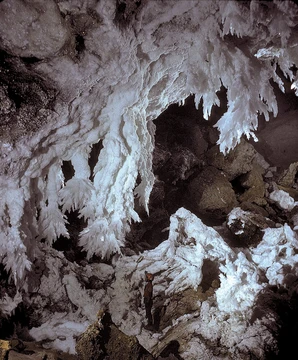
Phong Nha–Kẻ Bàng National Park
UNESCO site protecting the world's largest cave and ancient karst.

- location
- Bố Trạch and Minh Hóa communes, Quảng Bình Province, Vietnam
- world_record
- Largest cave (Sơn Đoòng) and longest river cave
Lore & Background
The park derives its name from Phong Nha Cave, containing many rock formations, and Kẻ Bàng forest. Champa inscriptions from the 9th century show human habitation long before Vietnamese annexation. In the late 19th century, French priest Léopold Michel Cadière explored the cave and proclaimed it 'The number one cave of Indochina'.
Reader's Guide
That survey also found 20 new caves totaling 56 km. The park borders the Hin Namno National Park in Laos and protects the limestone forest ecosystem of the Annamite Range.
Did You Know?
- Sơn Đoòng Cave, discovered in 2009, is the largest cave in the world, overtaking Deer Cave in Malaysia.
- Champa inscriptions from the 9th century have been found on steles and Buddhist altars inside Phong Nha Cave.
Frequently Asked Questions
What is Sơn Đoòng and why does it matter?
Sơn Đoòng is the largest cave in the world by volume, and it sits within the Phong Nha–Kẻ Bàng karst system. Its discovery helped earn the park its UNESCO World Heritage status because it represents an extraordinary example of ongoing karst evolution.
Why is Phong Nha–Kẻ Bàng considered important to karst science?
It preserves one of only two giant karst regions on Earth, with limestone that dates back hundreds of millions of years. The site offers scientists a living laboratory for studying how water, time, and geology carve out the planet's most dramatic underground spaces.
More in Caves And Karst Formations 1-24
Elsewhere in the Caves And Karst Formations universe
Spotted an error? Know more?
This is a living reference — every entry is fact-audited, and reader corrections feed straight into our audit queue. Suggest an edit · See this site's audit record