Frequently Asked Questions
The most-asked questions about caves and karst formations.
What exactly is a cave?
A cave is a natural underground void large enough for a person to enter, typically created when water dissolves soluble rock or when volcanic activity carves out hollow spaces. Caves range from narrow fissures to multi-level systems spanning hundreds of kilometers.
What is a karst formation?
Karst is a landscape shaped over long periods as slightly acidic water dissolves soluble bedrock such as limestone, dolomite, or gypsum. It produces characteristic features including sinkholes, underground rivers, caves, and towering rock pillars.
Who are the most influential figures in cave science?
Edouard-Alfred Martel, a French geologist of the late 1800s, is widely credited as the father of modern speleology for his systematic classification of cave types. In more recent decades, multidisciplinary teams exploring systems like Sac Actun in Mexico have expanded our understanding of submerged cave networks.
Where should a newcomer begin learning about caves?
Visiting or studying a well-documented showpiece cave such as Mammoth Cave in Kentucky gives you a concrete reference before tackling deeper geology. Structured introductions from the International Union of Speleology cover terminology, formation processes, and safety basics in an accessible way.
What are some of the most famous caves worldwide?
Mammoth Cave in Kentucky, USA, holds the record for the longest mapped cave at over 680 kilometers of passages. Other iconic sites include the Waitomo Glowworm Caves in New Zealand and the vast Sistema Sac Actun underwater network in Mexico's Yucatán Peninsula.
How do stalactites and stalagmites form?
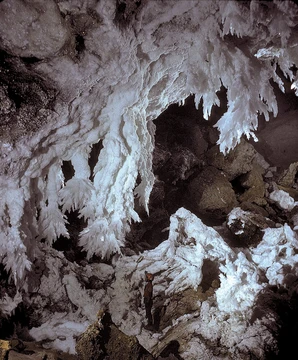
Both grow from mineral-laden water seeping through limestone; stalactites hang downward from the ceiling while stalagmites build upward from the floor where droplets strike. Over thousands of years, calcium carbonate deposits accumulate layer by layer to create these speleothems.
What is a sinkhole and how does it relate to karst?
A sinkhole is a ground-level depression that forms when subsurface water erodes soluble rock and the overlying material loses support, causing it to subside or collapse. They are among the most visible surface expressions of karst geology and can develop gradually or appear almost overnight.
What is a speleothem and why is it scientifically important?
A speleothem is any inorganic mineral deposit that grows inside a cave, encompassing stalactites, stalagmites, flowstones, and helictites. Their layered growth records past temperature, rainfall, and atmospheric composition, making them valuable proxies for paleoclimate research.
What is a notable milestone in cave exploration history?
In 1992, a team of cave divers entered the Sac Actun system in Mexico, which has since been confirmed as the longest underwater cave network on Earth. The discovery fundamentally changed how researchers view the relationship between ancient Yucatán civilizations and submerged cave waterways.
What is the difference between a cave and a cavern?
In everyday language the two terms are often used interchangeably, but some organizations such as the National Speleological Society reserve 'cave' for any natural underground enclosure and 'cavern' for a larger, more accessible chamber. The distinction is largely regional and not universally standardized.